Our blogs

Harnile Process

This image from harnile

Harnile Process


In Middle Atlas workshops, Harnile ceramics follow seven steps from earth to tableware. The work moves with the weather—dry spells for digging, rainy weeks for wedging stockpiles.

This image from harnile

1. Sourcing Clay

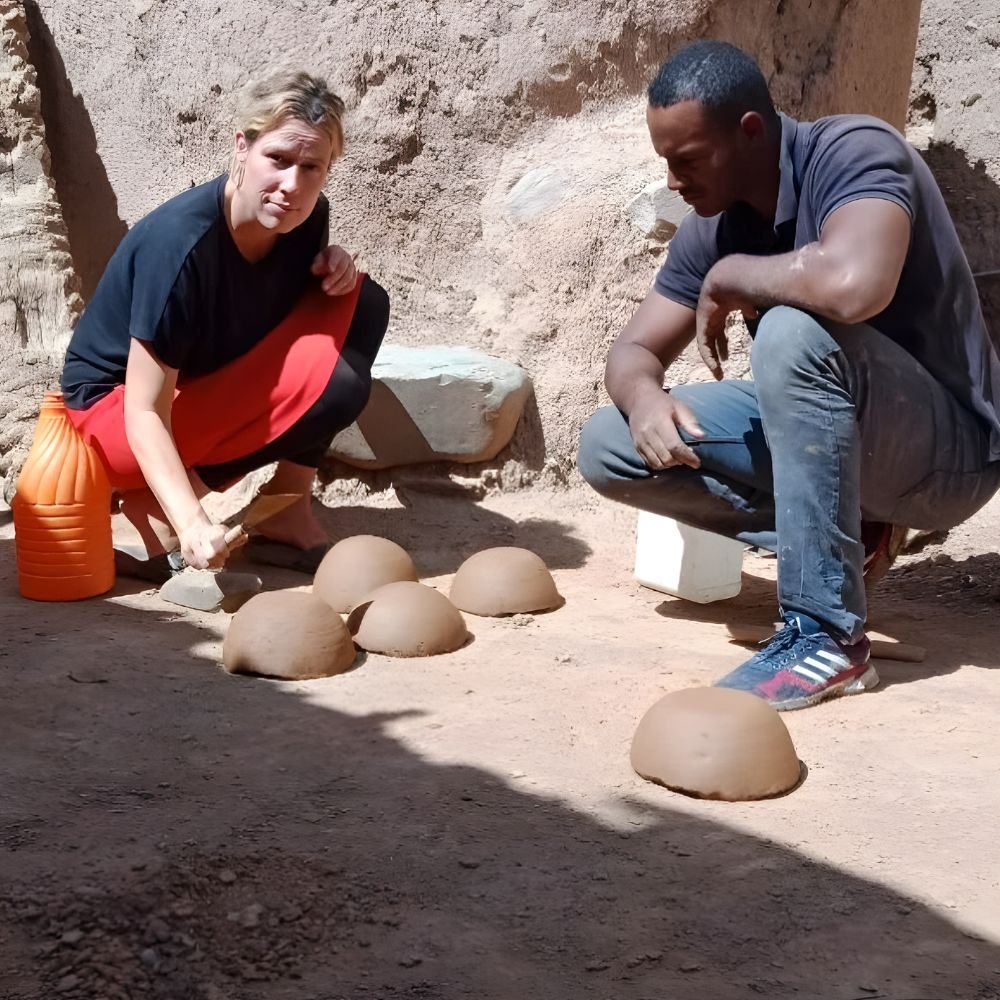
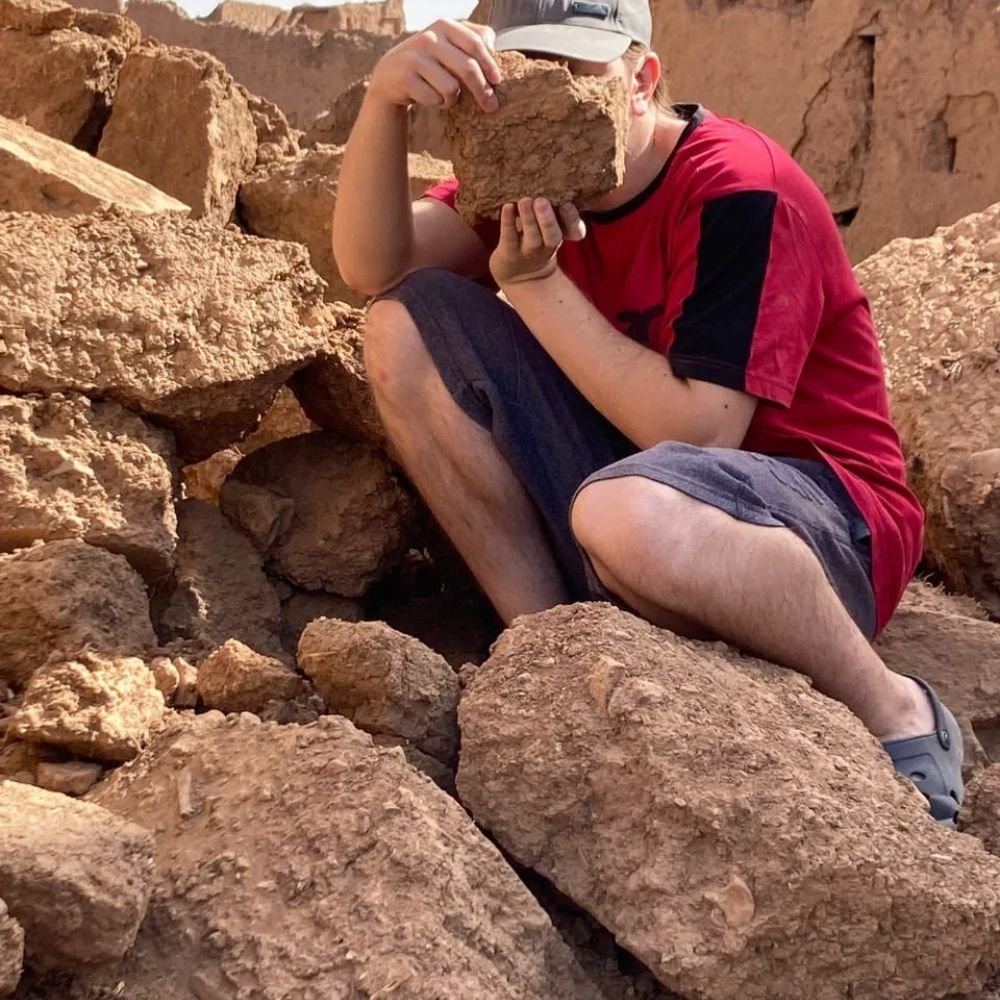
Clay comes from deposits along Middle Atlas stream banks where floods cut into limestone layers. Diggers use spades to reach seams 40-70 cm deep—material with iron streaks that dries to red-brown tones and pale gray when wet. Sites rotate yearly: one near oak stands yields clay for wheel work, another by cedar lines gives sandy mix for slabs.

Teams of two or three extract 120 kg per day. They load it into burlap panniers on mule trains that follow rocky trails 3 km back to the workshop yard. There it spreads 8 cm thick on clay pans, covered with brush against night damp. Dry periods last 10 days till it reaches the right firmness. Wet clay stores in pits lined with straw. Spring rains pause digging—reserves from summer carry through. Mules rest under olive trees while diggers drink tea from the same stream.

This image from harnile

2. Wedging

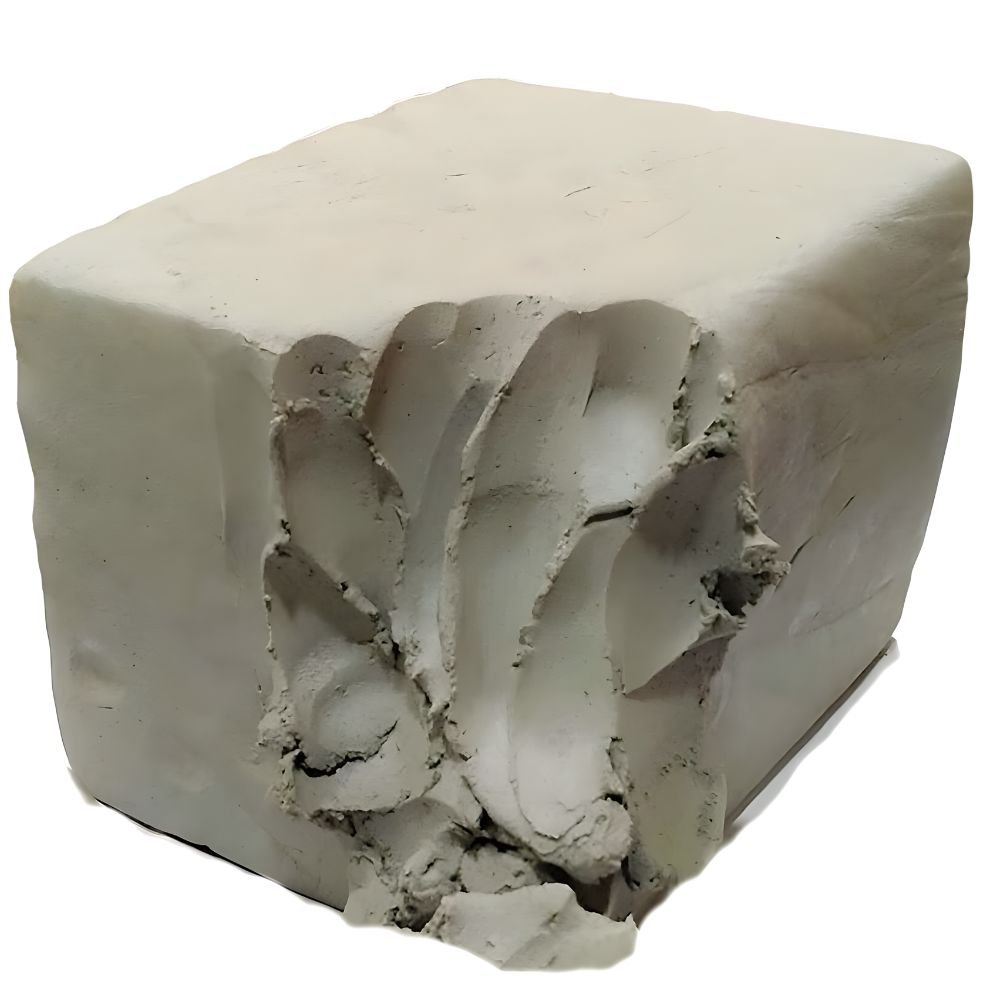
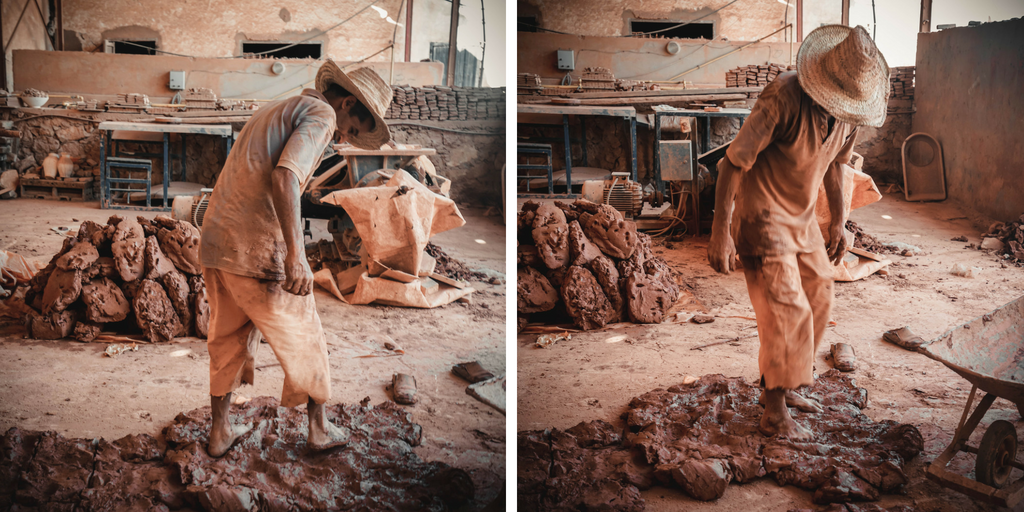
Cleaned clay wedges on wide cedar planks oiled with linseed. Artisans cut 3 kg blocks in half, slam down folding edges inward 80 times till thumb cuts show dense grain with no air bubbles. Sand adds 5% by weight for tooth; water mist keeps workable.

They test by throwing a small lump—if it centers even under palm pressure it’s ready. Others slump sideways from trapped pockets and go back in the pile. Wedged loaves stack in damp sand bins holding shape two weeks. Daily output: 40 kg processed for next morning wheels. Rejected lumps re-wedge with grog dust from broken ware. You hear the rhythm of slamming all morning, mixed with talk about the next digging trip.

This image from harnile

3. Form

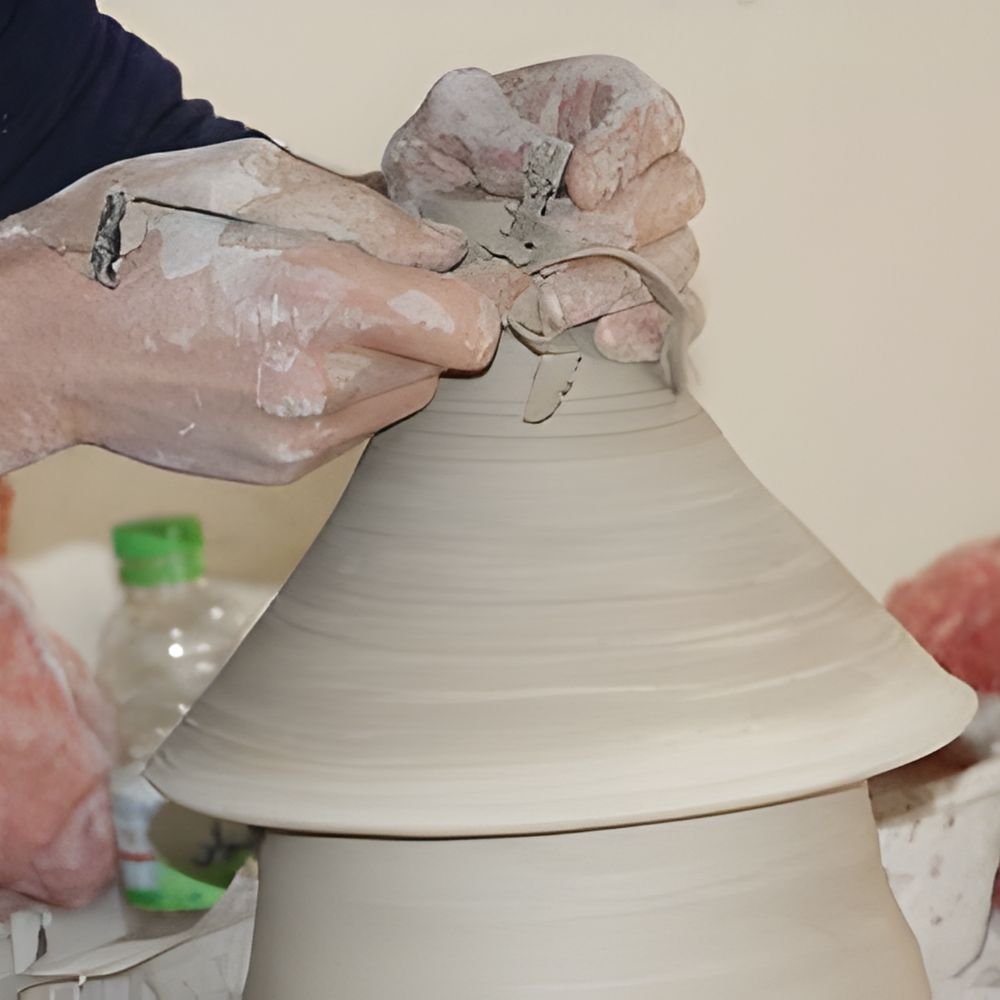
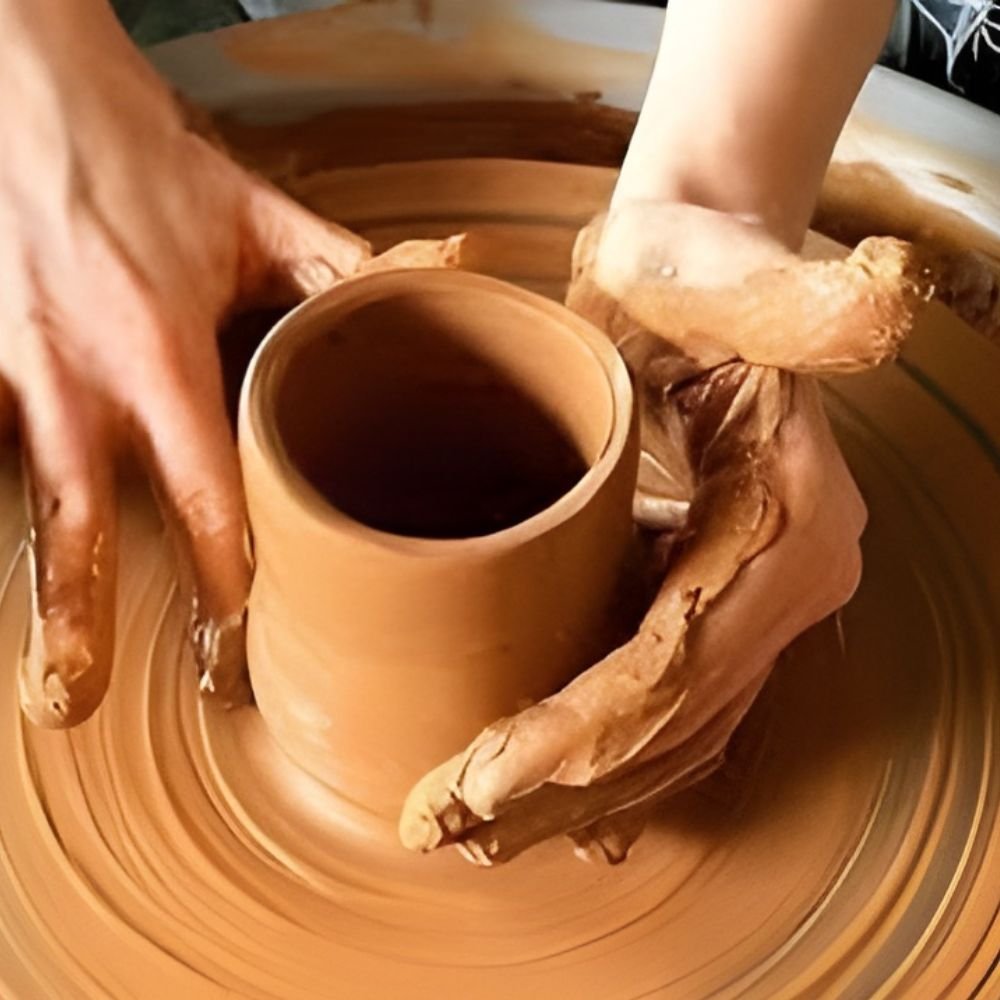
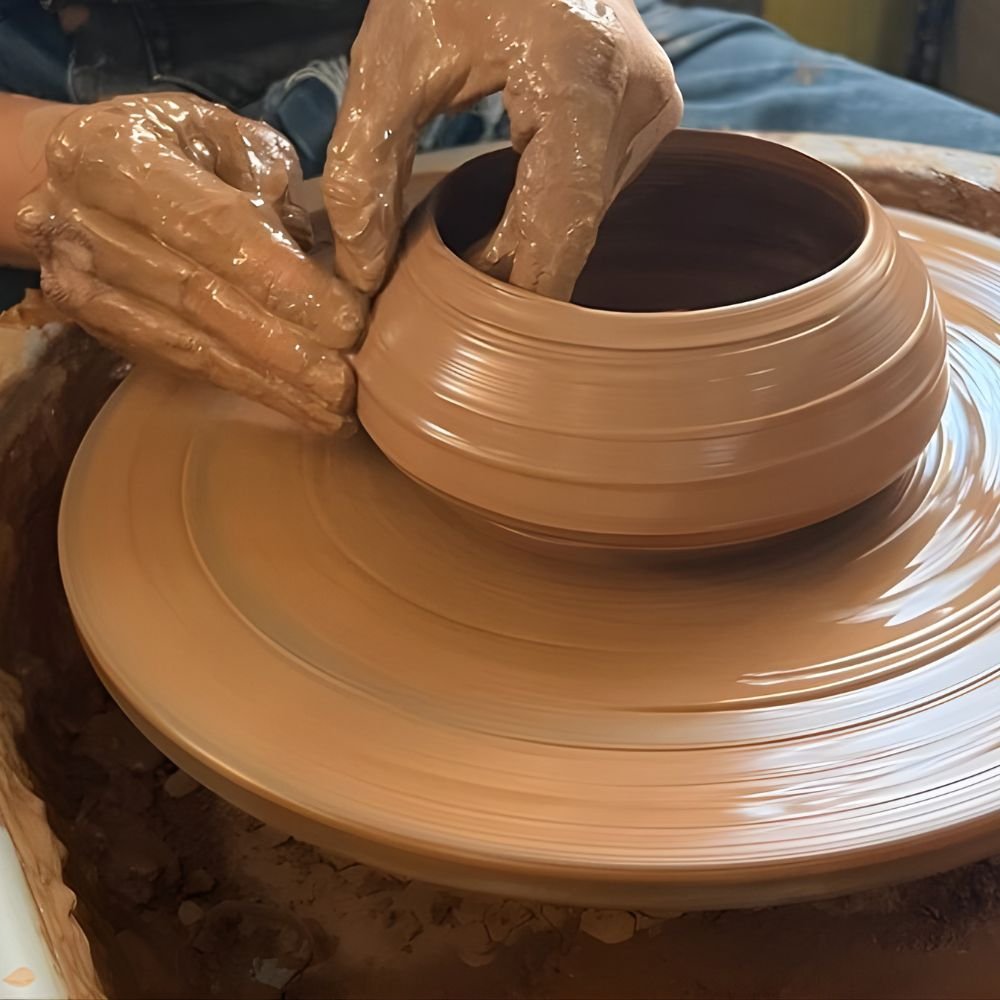
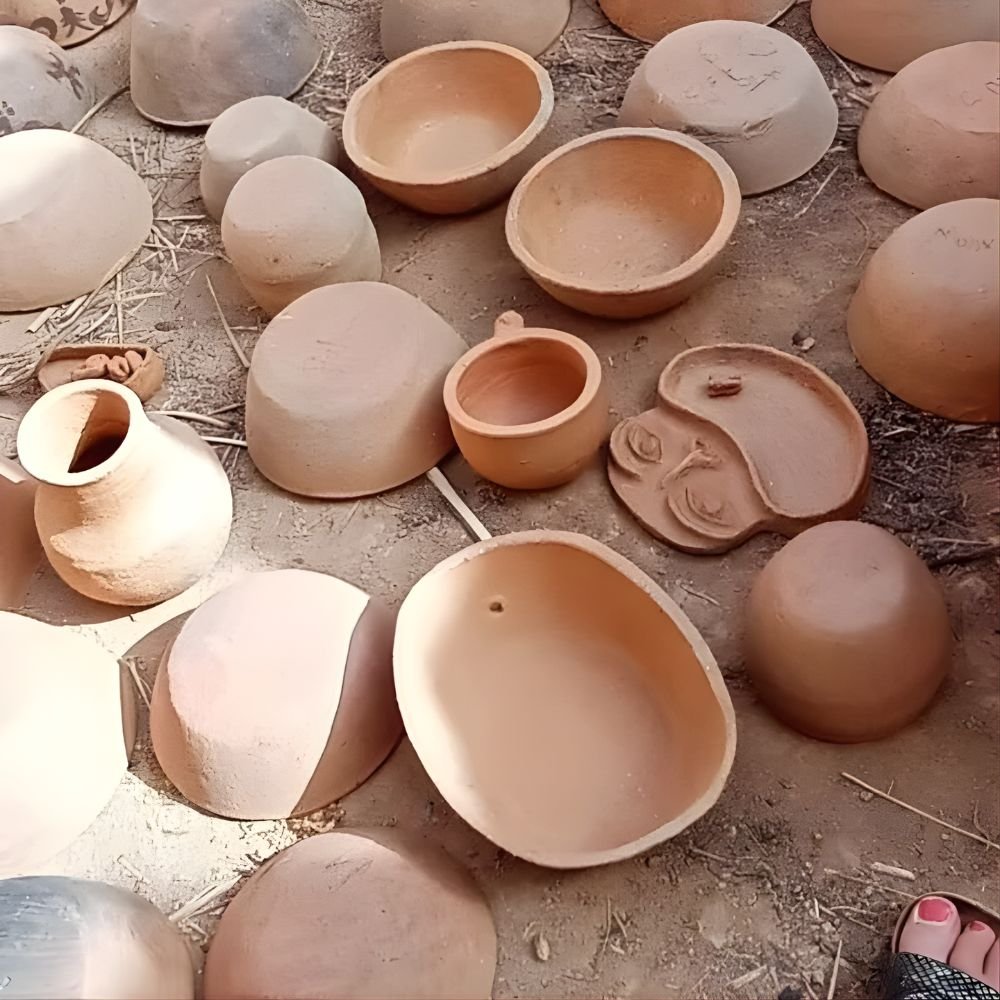
Kickwheels turn in open sheds—stone flywheels 50 cm diameter kicked steady by right foot while left hands clay. Tagine bases pull from 2.8 kg lumps: bottoms 30 cm wide, walls 4 cm thick sloping 15 degrees to galleted rims. Platters slab-roll 6 mm sheets through wooden frames, circles 27 cm cut with wire bows after mold drape. Bowls throw 18 cm tall from 1.5 kg, interiors thumb-smoothed, exteriors ribbed for curve control.

Handles pull separate from mug walls, scored and slipped after leather-dry stage. All mark maker’s thumbprint on base, dry foot-up on wire shelves misted twice daily 5 days total. One artisan throws 25 pieces before lunch; another coils handles till her hands cramp. The wheel hum fills the shed like a heartbeat.

This image from harnile

4. Fire

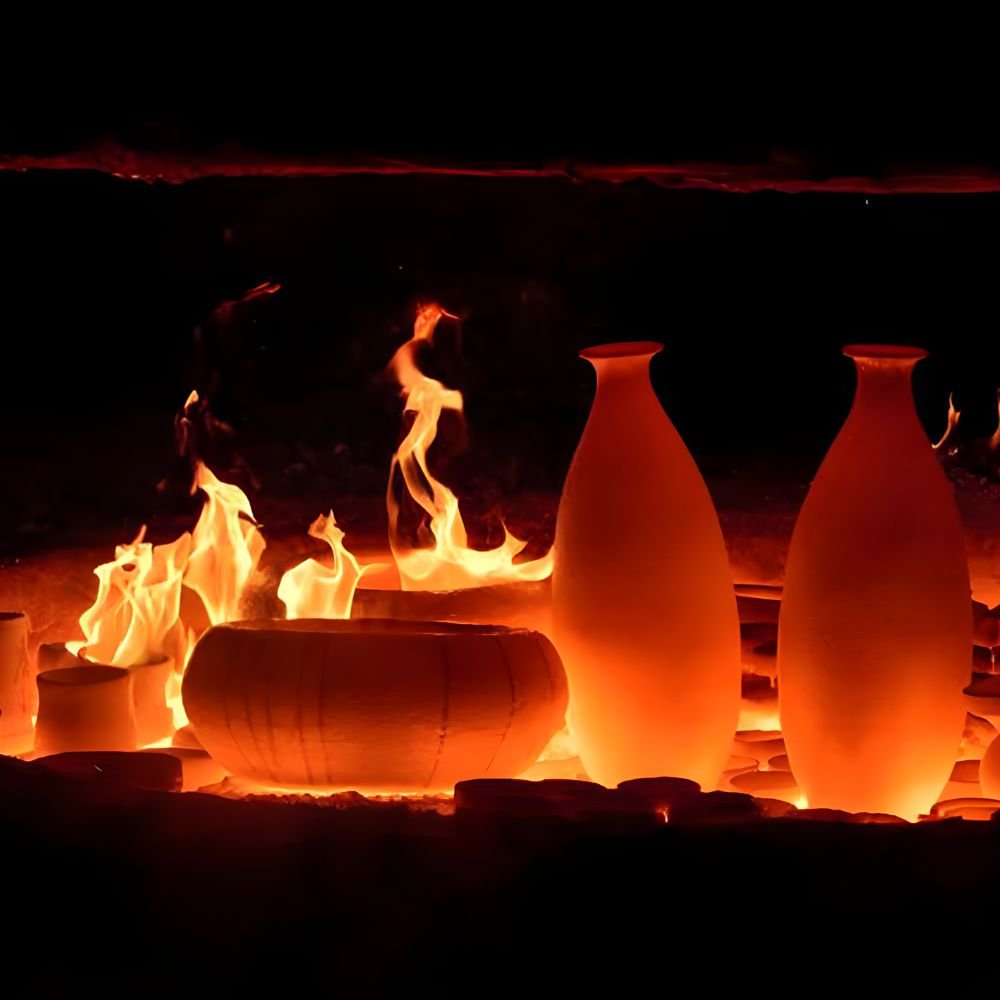
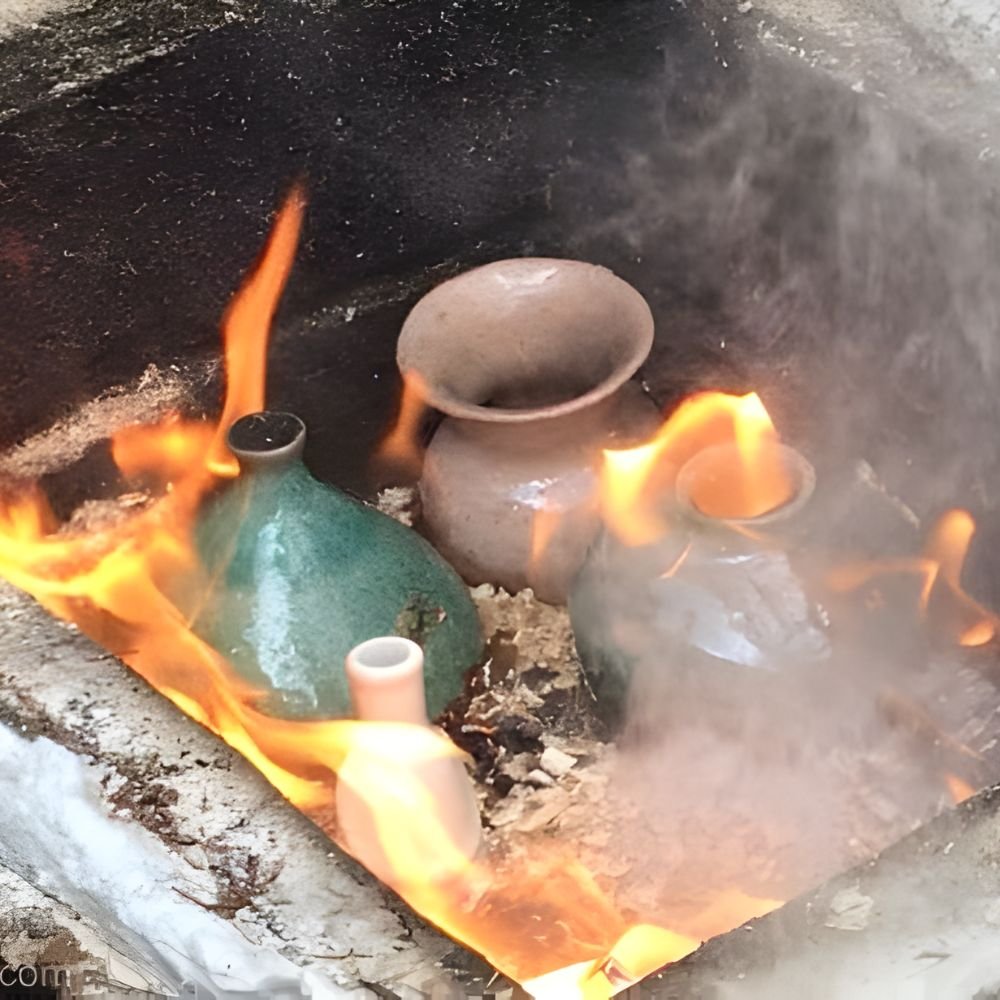
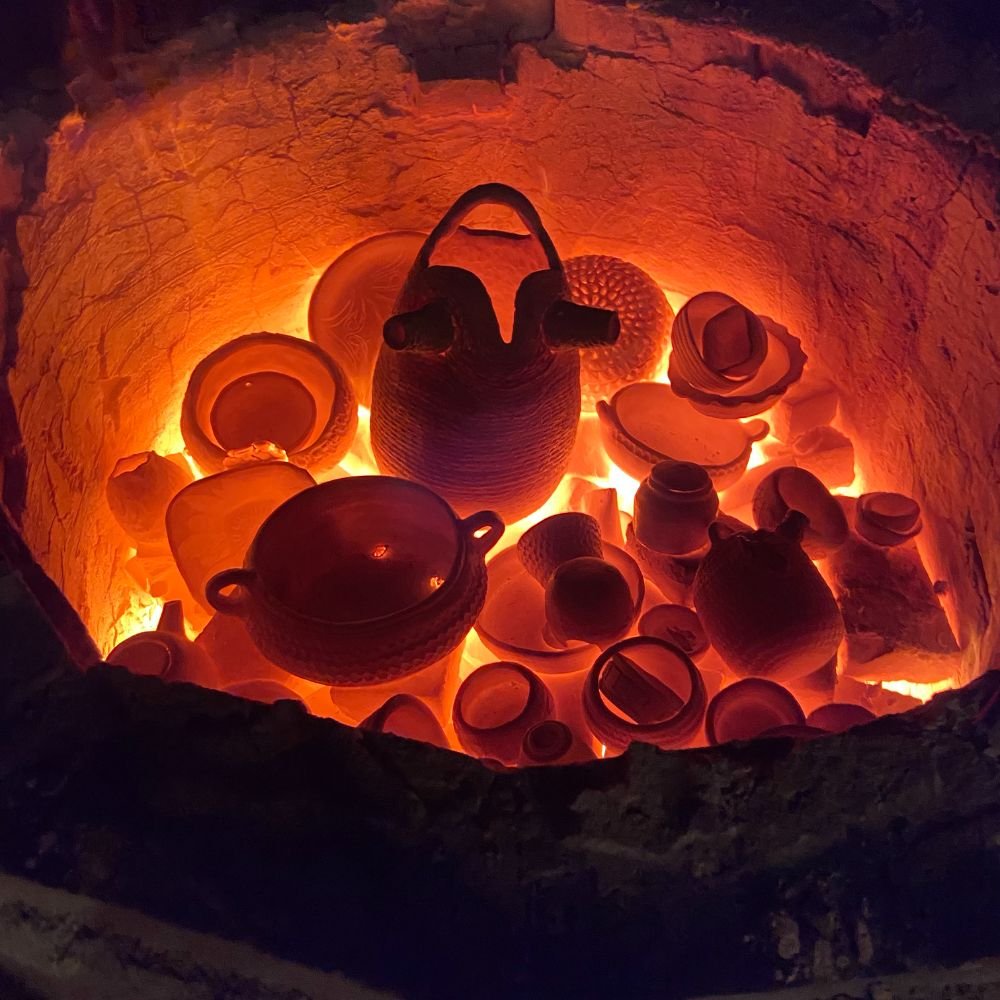
Bisque kilns dig 1 m deep into hillside clay—fireboxes pack 80 pieces dense with 3 cm props. Thorn scrub starts smoke, olive stones sustain 650°C overnight ramp to cone 06 pink glow through peepholes. Soak 2 hours burns carbon black; cool 18 hours unloads light bodies handleable without dusting.

Kilns rebuild monthly patching cracks with slip mortar. Wood ash scatters floors absorbing spills. Winter firings tunnel under berms blocking wind; output 60% yield after cracks from fast dry. Someone watches the peephole glow all night, adding wood when it fades. Morning unload smells like wet earth mixed with smoke.

This image from harnile

5. Glaze

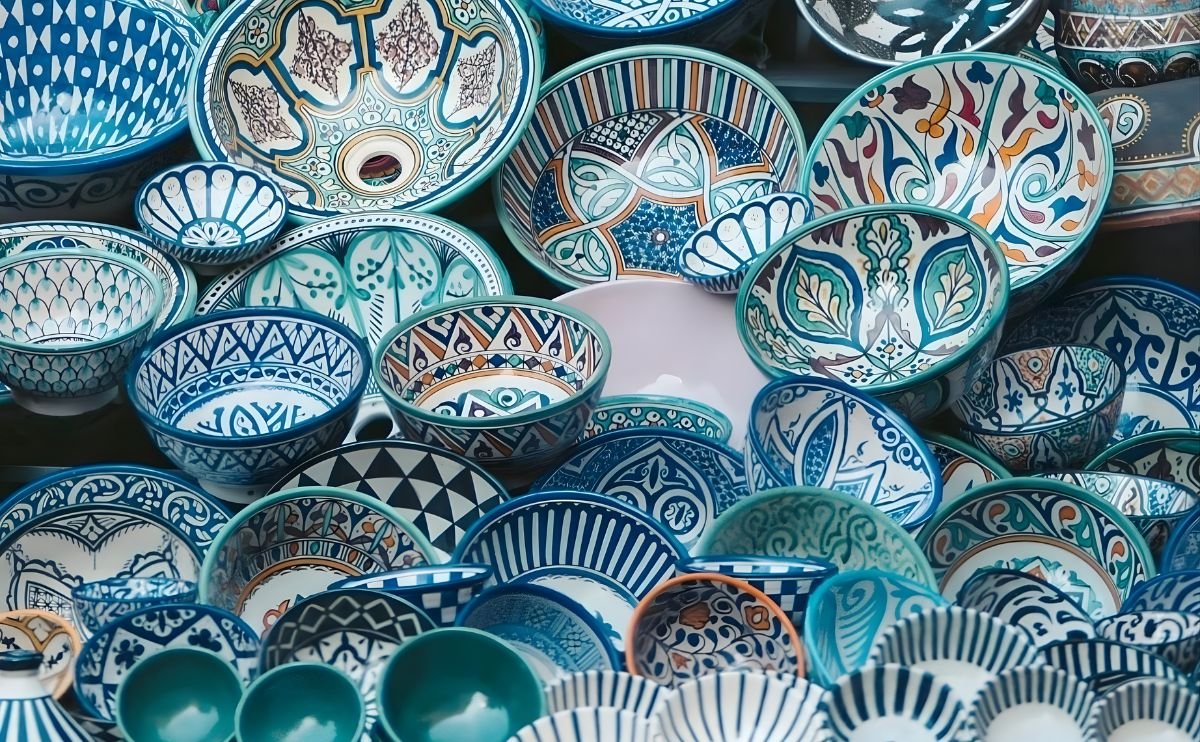
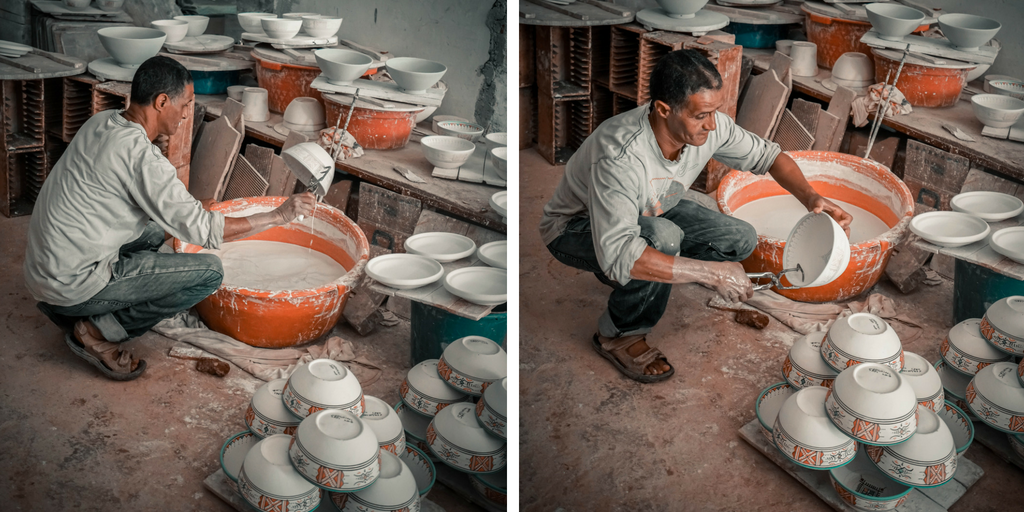
Glaze mixes age in 25-liter clay vats: feldspar from granite washes, limestone whiting, copper from verdigris pans. Frit melts from window glass cullet boiled dry—transparent base fluxes at cone 6, tin-white opacifies for food surfaces. Small pieces brush two coats with horsehair; tagines dip 5 seconds rim-half only, hang on willow forks till skins.

Test tiles fire first checking run length—drips pool rims, long runs recycle. Glaze dusts air fine; wet cloths cover work zones. Storage crocks seal with lids holding batches three months. The copper glaze turns hands green till washed off. Mixers stir with wooden paddles worn smooth from years.

This image from harnile

6. Decoration

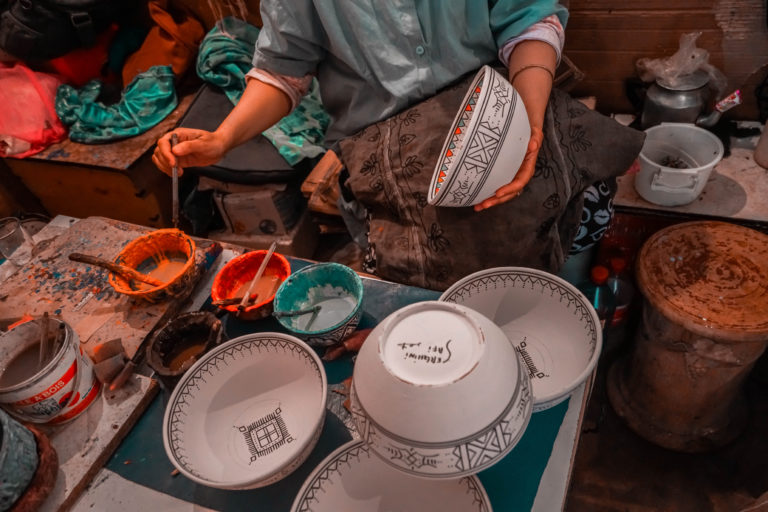
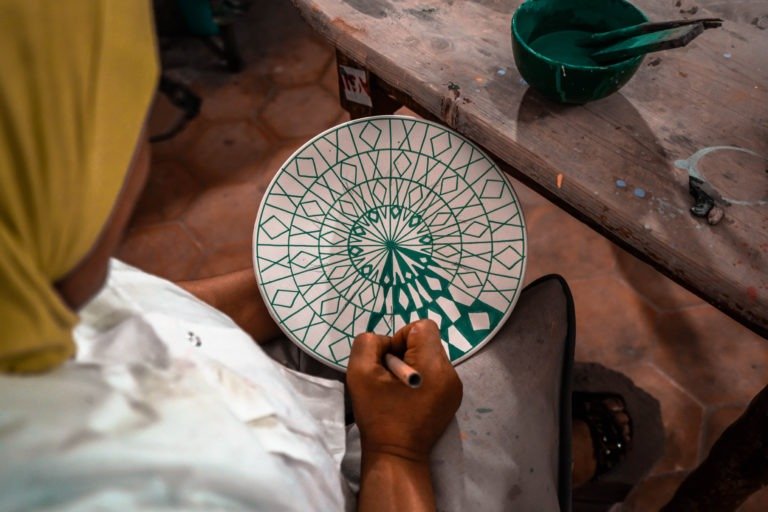
Iron slip strains through muslin—pipes from reed-tipped leather bags trace mountain outlines, Berber crosshatch, vine scrolls 2 mm wide. White engobe layers under cobalt rim stripes 1 cm apart. Bamboo quills scratch fine cedar branches through slip before dry; potato stamps press eight-pointed stars on damp panels. Wax dots resist glaze on tagine galleries keeping raw clay breathable.

Pieces turn slow on stick pivots drawing even circumferential lines. Dry belly-down on pine needles preventing sticking. Daily 25 pieces decorate before glaze fire load. One painter fills a bag with slip each morning; her lines waver less after lunch tea. Mistakes wipe off with wet sponge.

This image from harnile

7. Final Fire

Glost kilns load looser 4 cm spacing—saggar boxes catch ash on interiors. Cedar splits 12 cm feed ports climb cone 9 over 20 hours; peepholes track orange-white glow. Reduction chokes dampers 15 minutes flashing copper greens at peak 1250°C. Smoke rolls valley-ward; 60-hour cool seals crystal phase without shatter.

Unpack tests ping tones—clear rings pass tableware, dull recycle. Lids match bases with cornmeal contact paper; handles tug-test filled boiling water. Crates straw-nest for market vans. The first piece out gets tapped—good ring means the whole load works. Smoke lingers on clothes for days.

This image from harnile

Leave a Reply

Your email address will not be published. Required fields are marked *