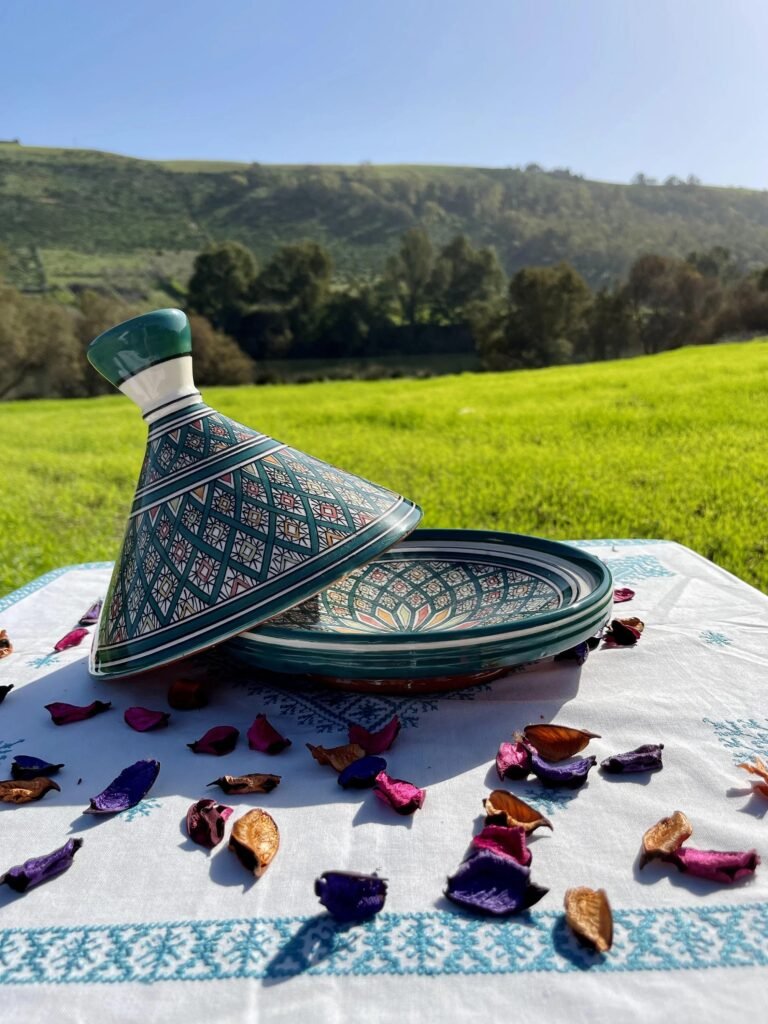
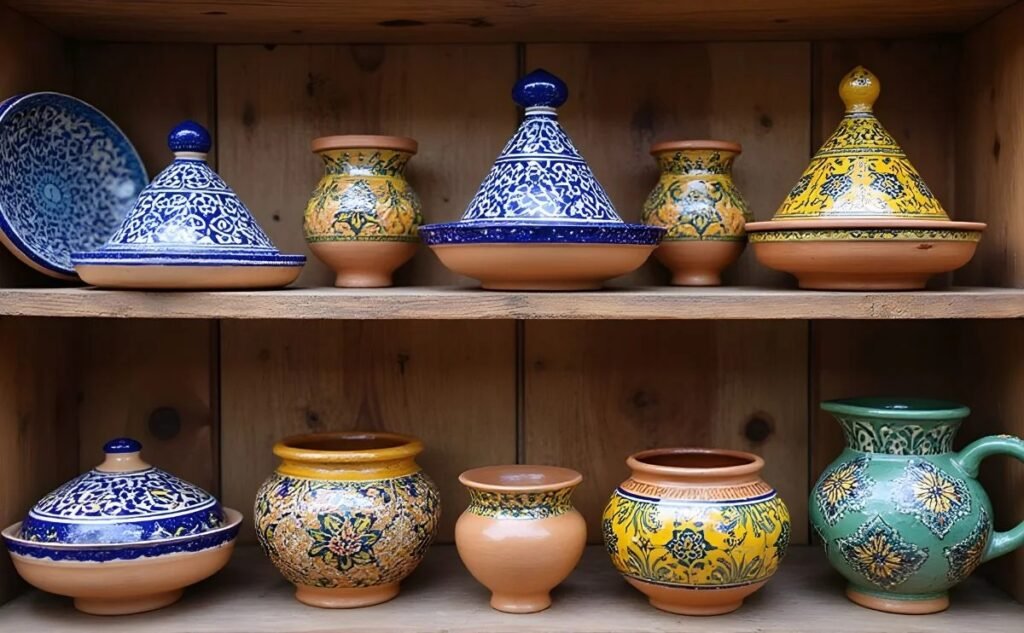
Composition: Hand-molded and hand-painted terracotta clay. Select decorative vases also feature metal inlay detail.
Glaze: Each piece is finished with a traditional hand-applied ceramic glaze. Tableware pieces (plates, bowls, serving sets, tagines) are glazed for everyday use; decorative pieces (vases, planters) are glazed for appearance.
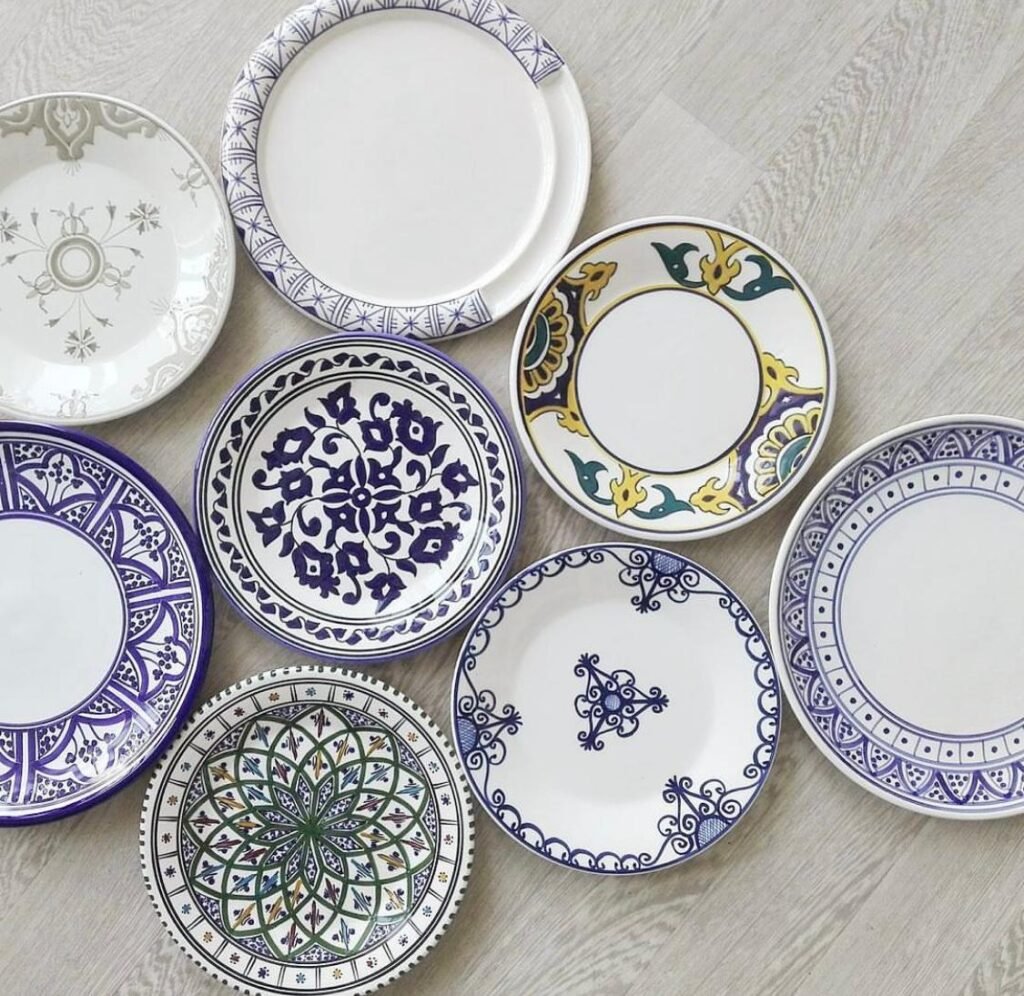
Variations: Variations in pattern and texture occur during the hand-firing process.
Care Instructions
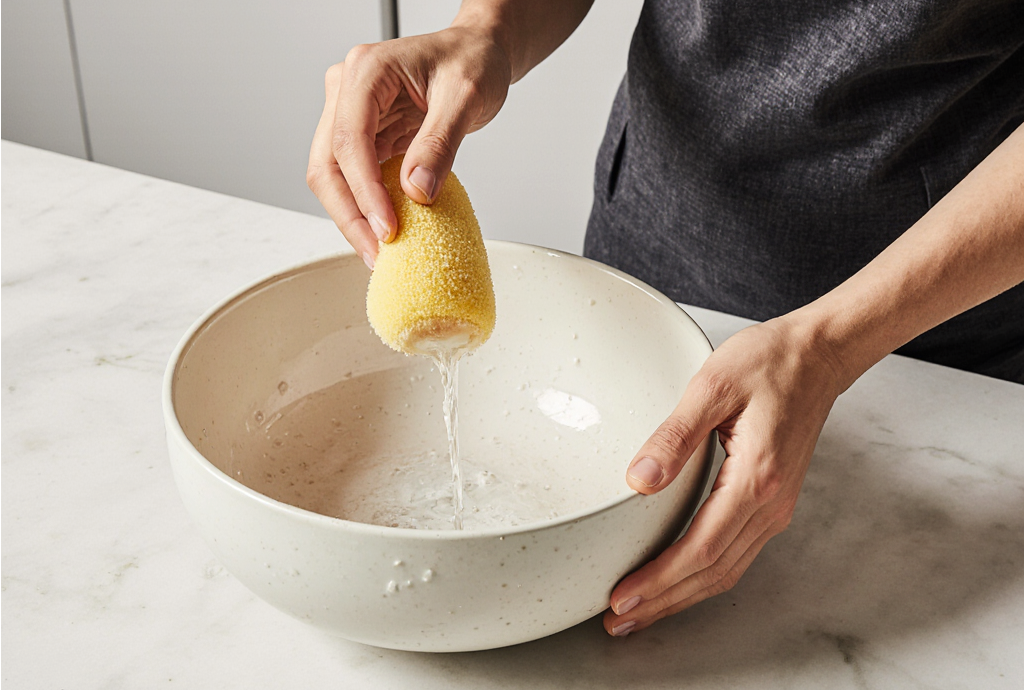
Cleaning: Hand wash only with a sponge and mild dish soap.
Dishwasher Use: Do not place in a dishwasher. High pressure and detergents can cause the glaze to dull or crack.
Tools: Do not use steel wool or metal scrapers, as these leave marks on the surface.
Metal-inlay pieces: Wipe clean with a soft, slightly damp cloth rather than soaking, to help preserve the inlay’s finish.
Usage Guidelines
Temperature Management: Do not move items from a refrigerator to an oven or from an oven to a refrigerator.
Heat Sources: Do not use on open flames or induction stovetops unless the specific product listing states it’s rated for that use.
Microwave Use: Do not use in the microwave if the item has metallic luster, an unglazed base, or metal inlay.
Planters & Pots: Designed for use with soil and plants. Not intended for food or drink contact.
Storage & Handling
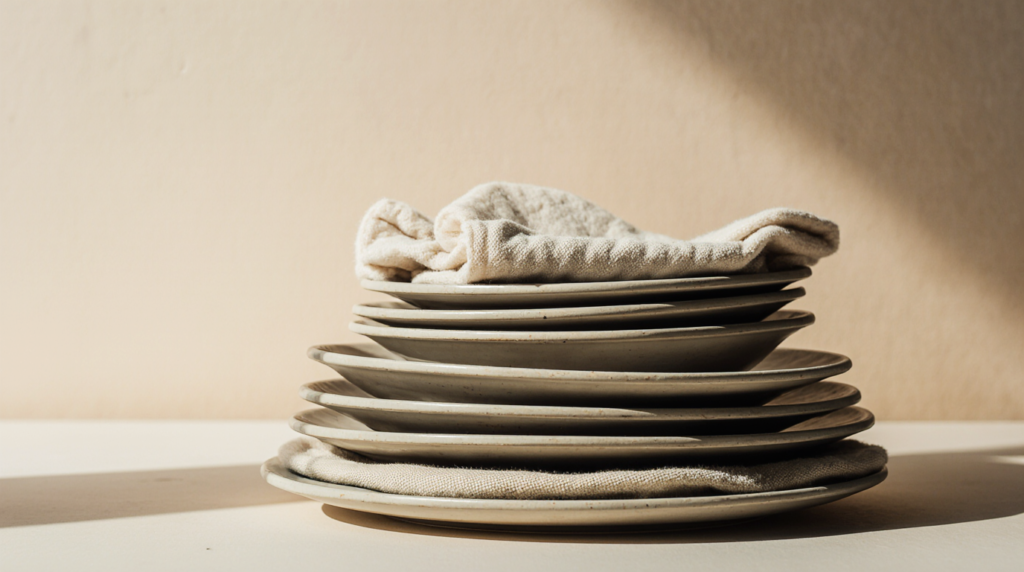
Stacking: Place a cloth or protector between plates and bowls to prevent scratching.
Storage Placement: Store pieces on shelves to ensure stability.
Moisture Control: Ensure items are dry before storing in cabinets to prevent moisture retention in the clay base.
Environmental Attributes
Materials: Harnile products are made from clay and mineral-based pigments instead of plastics.
Disposal: Terracotta is a material that does not contribute to long-term waste.
Production: Methods support Moroccan artisanal communities and reduce industrial footprints.